What Attachment Means
Attachment is the way you bond with other people. It forms in your first years of life based on how your caregivers responded to your needs. Were they consistent? Attuned? Unpredictable? Distant? Your young brain took notes and built a template for what relationships are supposed to feel like.
That template does not expire. It follows you into friendships, romantic partnerships, and even how you relate to your own children. It operates in the background, influencing how you handle closeness, conflict, vulnerability, and need.
Understanding your attachment style is not about putting yourself in a box. It is about recognizing the automatic responses that shape your relationships so you can start making conscious choices instead.
The Four Attachment Styles
Researchers have identified four main attachment patterns. Most people lean toward one, though you might see yourself in more than one depending on the relationship.
Secure attachment develops when your caregivers were generally consistent and responsive. You learned that it is safe to need people and that they will usually be there. In adult relationships, this looks like comfort with intimacy and independence, the ability to communicate needs directly, and the capacity to handle conflict without catastrophizing.
Anxious attachment develops when your caregivers were inconsistent. Sometimes they were warm, sometimes they were unavailable, and you could not predict which version you would get. As an adult, this can look like needing frequent reassurance, reading too much into silences, feeling panicky when your partner pulls away, or orbiting your partner's mood to manage your own anxiety.
Avoidant attachment develops when your emotional needs were consistently dismissed or met with discomfort. You learned to be self-sufficient because relying on others felt unsafe. In adult relationships, this shows up as discomfort with closeness, pulling away when things get intense, valuing independence to the point where your partner feels shut out, or feeling suffocated when someone gets too close.
Disorganized attachment develops when the person who was supposed to be your source of safety was also a source of fear. This creates an impossible bind: you need closeness but closeness feels dangerous. In adult relationships, this can look like intense push-pull dynamics, hot and cold behavior, difficulty trusting, and a deep fear of both abandonment and engulfment.
What Happens When Styles Collide
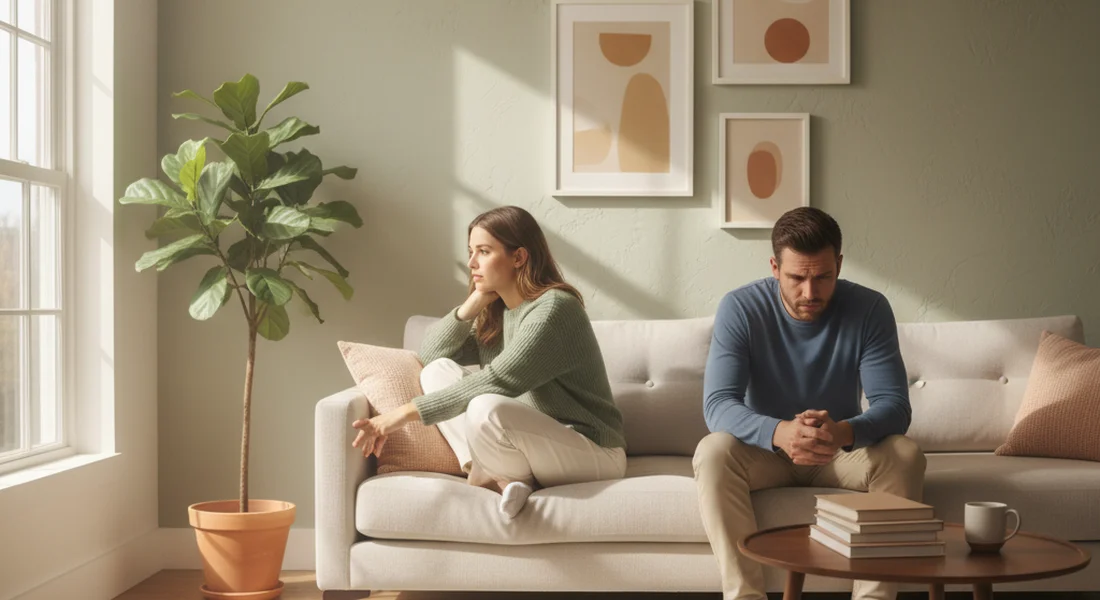
One of the most common patterns I see in couples therapy is the anxious-avoidant trap. One partner reaches for connection. The other pulls away. The reaching partner panics and reaches harder. The avoidant partner feels overwhelmed and withdraws further. Both end up in pain.
Neither person is the problem. The pattern is the problem. And the pattern makes perfect sense when you understand that one partner learned that closeness is never guaranteed and must be pursued, while the other learned that closeness is dangerous and must be managed.
Attachment-focused therapy helps both partners see the cycle they are in, understand where their responses come from, and build new ways of connecting that do not trigger each other's oldest fears.
“Phenomenal. Life changing.”
— Client, RooterCan Your Attachment Style Change?
Yes. Attachment patterns are learned, and what is learned can be updated. This is one of the most hopeful things about attachment theory. You are not locked into the style you developed as a child.
Change happens through what researchers call "earned security." It comes from experiences that gradually teach your nervous system that relationships can be safe, consistent, and responsive. Therapy is one of those experiences. A healthy romantic relationship can be another. Close friendships where you are seen and accepted matter too.
The work is not about forcing yourself to be comfortable with things that scare you. It is about slowly expanding your capacity for connection at a pace that does not overwhelm your system. Individual therapy is a good place to start, especially if your attachment patterns are showing up in ways that are causing you pain.
I work with clients in Newport Beach, Lake Forest, and throughout Orange County who are doing this work. If attachment is something you want to explore, a free consultation is a good first step.